
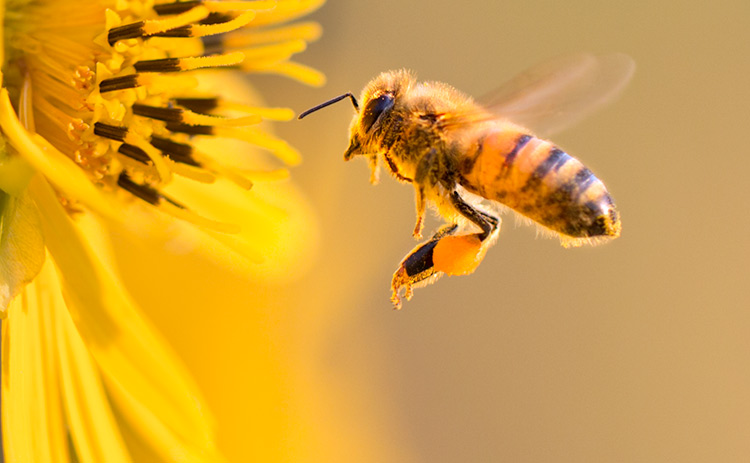
Nectar gatherers are the hard working bees which enrich and turn it into honey with the aid of their glands. We then collect their efforts from the hives.
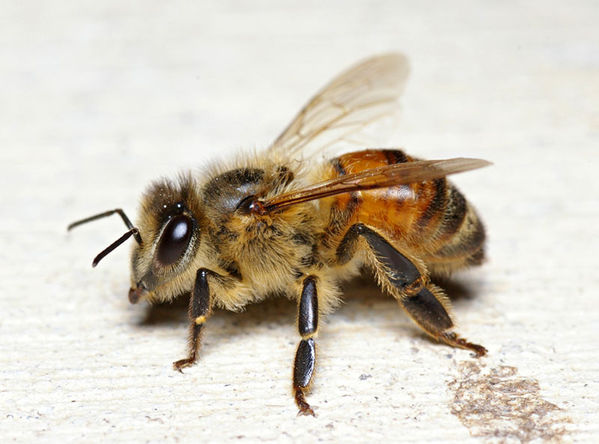
The western honey bee or European honey bee (Apis mellifera) is a species of honey bee. The genus name Apis is Latin for "bee", and mellifera means "honey-bearing".
The western honey bee is native to Europe, Asia and Africa. During the early 1600s it was introduced to North America, with other European subspecies introduced two centuries later. Since then, it has spread throughout the Americas.
Bees produce honey by collecting nectar, a clear liquid consisting of nearly 80 percent water and complex sugars. The collecting bees store the nectar in a second stomach and return to the hive, where worker bees remove the nectar. The worker bees digest the raw nectar for about 30 minutes, using enzymes to break down the complex sugars into simpler ones. Raw honey is then spread in empty honeycomb cells to dry, reducing its water content to less than 20 percent. When nectar is being processed, honey bees create a draft through the hive by fanning with their wings. When the honey has dried, the honeycomb cells are sealed (capped) with wax to preserve it.
Link:
E-mail:
Country / Region / Province / City:
- Hrvatska - Croatia›Istra- Istria›Buzet›Buzet


