
English name:
Local name:
Description:
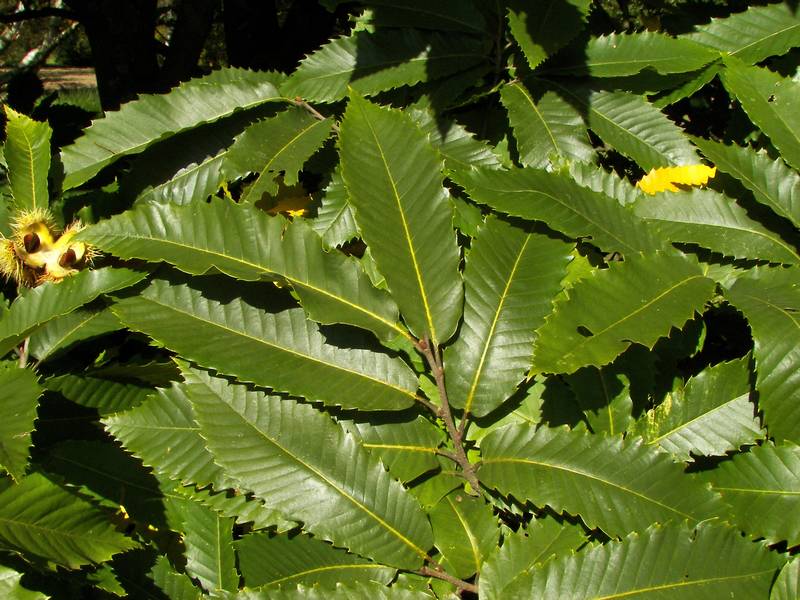
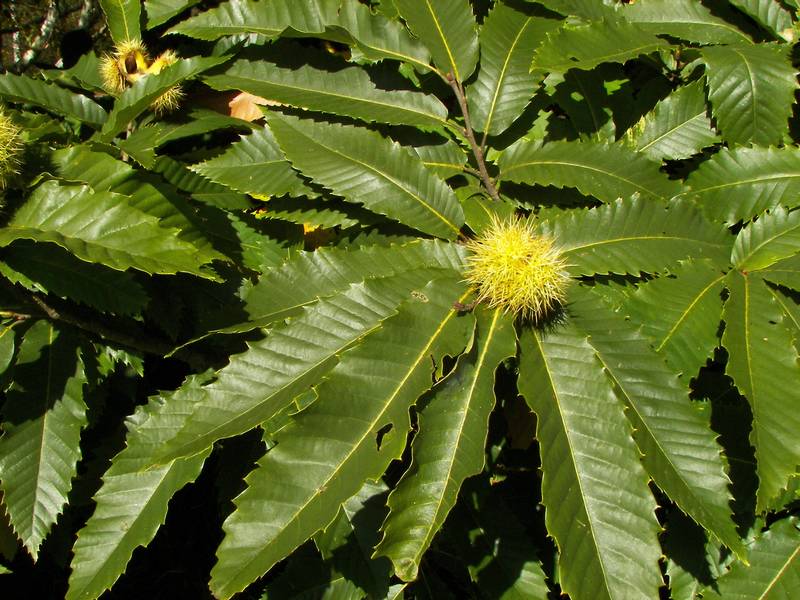
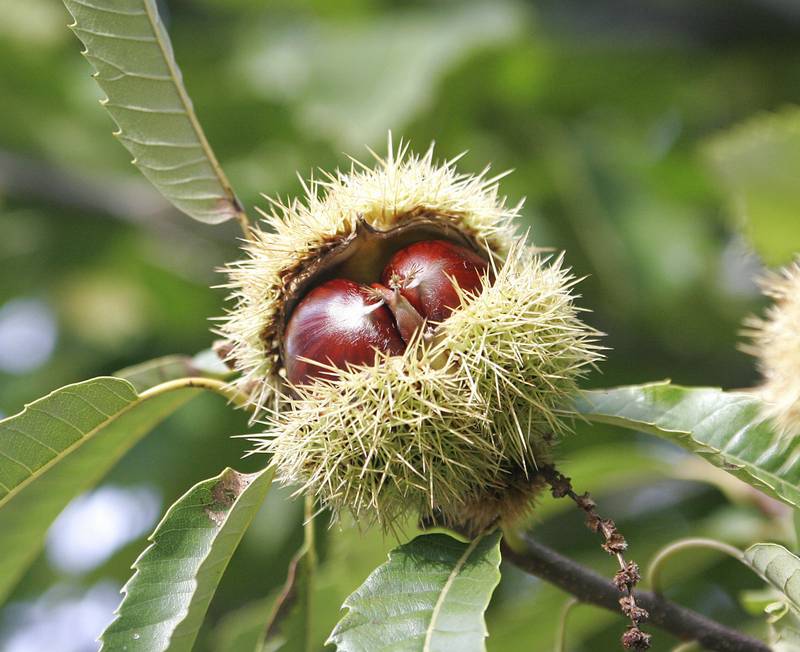
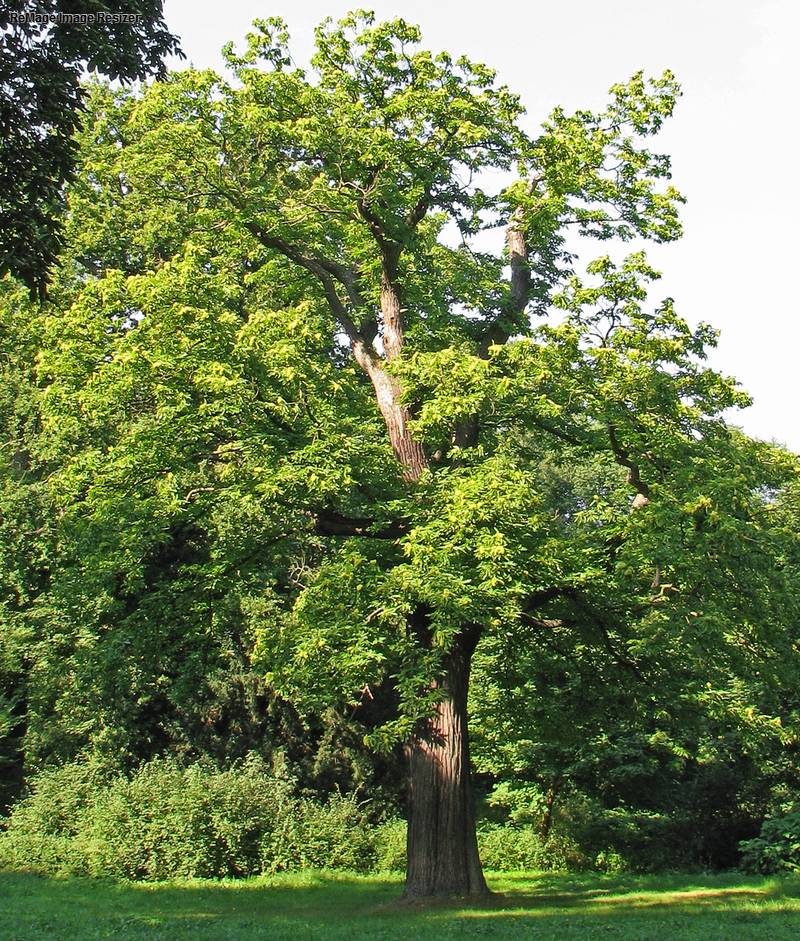
Deciduous forest tree up to 30 meters high. Young trees have smooth bark which later turns olive-green and with age to brown or grey colour with deep transversal fissures on the bark. It develops a rich and big crown. The roots penetrate deeply underground, they have a taproot and strong lateral roots which deeply branch out laterally. The top bud is bigger than lateral ones. It can be found in pure, mostly mixed stands of deciduous trees. Its leaves are oblong with roughly toothed edges. Leaves are random; the leaf blade is hard, leather-like, on the front side bare, dark-green and shiny, and hairy on the underside. It is leafing-out quite early, and it grows leaves in May. It blossoms after it grows leaves - in June. Male flowers form groups of 3 leaves or more into clustered vertical 10-30 cm long catkins with a hairy spindle, and at their base there are female flowers, and chestnut is a monoecious plant. The fruit is contained in a circular cupule which at the time of maturity splits open into four sections and it contains between 1 - 3 edible fruits (chestnut)
Uses:
Usable part:
Fruits, leaves extract
Usage:
It is used for nutrition, and known by the bee-keepers as extremely melliferous plant. Leaf extracts in combination with thyme are used as plants with anticatarrhal properties.


